
THREE $1,000 UNITED STATES SAVINGS BONDS
In 1948, on the day my wife Linda was born, her grandmother purchased Three $1,000 United States Savings Bonds in her name. They cost $750 each, and after ten years reach their full value. Most continue to earn interest after they mature, and those were the type Linda’s grandmother handed her at our wedding. The gift was a complete surprise to my wife and her parents, and I certainly was not expecting a dowry.
We met in college, and hung out with the same crowd. There were a few couples, but most of us were just friends. About half of us, like Linda, were from Philadelphia and half, like me, from New York, but we all kept in touch after college, and got together frequently. Linda taught at an inner-city school in a rough neighborhood in Philadelphia, living at home while searching for an apartment with a friend. I was teaching high school-aged “wards of the state.” These were runaways, fire-setters, habitual truants that were housed at a New York State Hospital, which for them was a euphemism for “jail.” The state was required to provide 5 hours of education a day, and I was the provider.
Linda and I were regulars at the group get togethers, rarely missing an opportunity to party. A bunch of us went to see the play Hair when it was on Broadway, caught the legendary Grateful Dead At Midnight concert at The Fillmore East. Eventually I started thinking about steering our friendship toward a more romantic relationship. I called her and asked if she wanted to see the new movie everybody was talking about, Butch Cassidy and the Sundance Kid.
She immediately said, “Sure. Who’s going?” “Just you and me.”
“Oh. You mean, like, a date?” “Yeah. Like a date.”
Awkward silence, then, “Sure.”
“Great. I’ll drive down now to Philly and crash at Mark’s apartment. I’ll pick you up tomorrow night around 6 so we can grab a cheese steak at Pat’s before the movie.” That was exactly 56 years ago. I know that because in June we’re going to celebrate the 56th anniversary of our marriage, and the day I became part owner of Three $1,000 United States Savings Bonds.
In 1970 $3,000 was a lot of money. You could buy a really nice car for $3,000. Linda’s dad bought her a new Volkswagen Bug when she graduated college, list price $1,499. All of our coupled New York friends were apartment hunting in Brooklyn or Queens because houses in the suburbs were unaffordable. My job had a 35 minute commute out of the city, which gave me an idea. If we looked 35 minutes further out of the city, we would be out of the suburbs and might be able to find a house we could afford. My commute would be the same and Linda could get a job at a local elementary school.
We found an old house in what was then the sleepy little town of Harriman, NY. It needed some work but was livable, and the price was $17,500. We cashed the Three $1,000 United States Savings Bonds which, with the extra interest, were now worth almost $4,000. We plopped down a $3,500 down payment, and took out a 30 year,
$14,000 mortgage. Our payments were $99/month, including taxes and insurance. Linda got a job immediately at Pine Tree Elementary School in Monroe, NY. We each received a paycheck every other week, and they didn’t match weeks. So Linda would get 2 week’s pay, then the next week I would get 2 week’s pay. We were living large! Until 4 years later, when we were invaded by Suburban Sprawl.
The owners of the 40 acre cornfield near our house decided instead to grow 65 identical split level homes, and started an irreversible trend. The two-lane, winding country roads were all widened and straightened, with intersections that had turning lanes and were now spanned by three different sets of traffic lights. And the value of our fixed up $17,500 house had doubled. My sister lived outside Boston and knew we were dreaming of starting a private kindergarten. She said once you crossed the border into New Hampshire there was cheap land available, and New Hampshire public schools started at first grade, so all kindergartens were private. But when we looked it was just like what we were leaving. So we did a replay of our original plan to get the most out of the Three $1,000 United States Savings Bonds, drove about 35 minutes further north, and found an old farmhouse on 20 acres in what was then the sleepy little town of Goffstown, NH. It too needed a lot of work, it was livable, and cost $40,000.
So we sold the house in Harriman for $35,000, paid off the the $13,000 mortgage and pocketed a whopping $22,000. We once again put a sizable chunk down on the farmhouse, and assumed an affordable 25 year mortgage. Now in our thirties, we would be in our 60’s by the time a 30 year note was paid off, and thought people that old were probably stumbling around old age homes. We remodeled the entire first floor into classrooms and lived in the apartment upstairs that the previous owners had rented out. We opened with 6 students. We advertised “2 certified teachers” and felt anybody who dropped by should see us both. It was not a profitable situation. By the end of the school year we had 13 (still not profitable) but were filled for the following year with a small waiting list We starting attracting students from surrounding towns and soon had a 2 year waiting list. We enlarged the school and our apartment upstairs to accommodate our growing family. We sold 10 of our 20 acres to a neighbor who built 4 houses on it, and we bought a piece of property in the neighboring town. We got a 15 year SBA loan and built another school with offices upstairs. The demographics were changing, most families now had two working parents, and day care was a necessity. Once again we were living large. But we weren’t done.
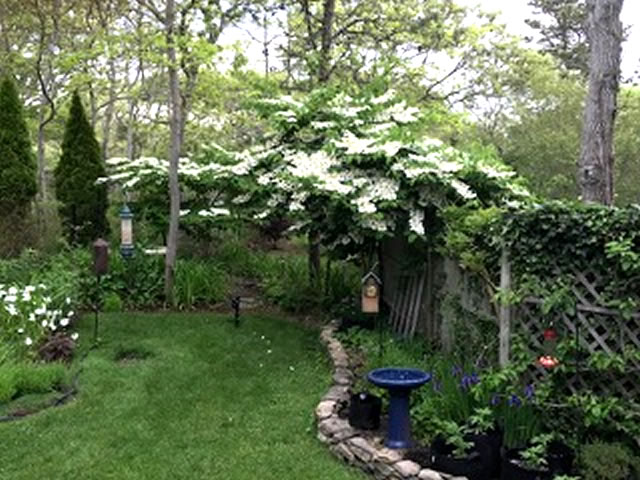
When we became empty nesters we went back to our original playbook. Thanks to the head start from the Three $1,000 United State Savings Bonds all our mortgages were paid off. Debt free, retirement suddenly became a possibility. We sold the business and the properties and bought the typical 3 bed, 2 bath, 1350 square foot Vineyard special. Like all our previous purchases, it needed some work, but was livable. Now we sit on our deck in the early evening admiring Linda’s beautiful small backyard garden, entertained by the swarms of birds zooming in and out of our bird feeders, seemingly directed by some cosmic air traffic controller. Frequently one of us will turn to the other and ask, “How come we’re allowed to do this?” The reply is always the same. Three $1,000 United States Savings Bonds.