
THE ANIMAL KINGDOM CHART
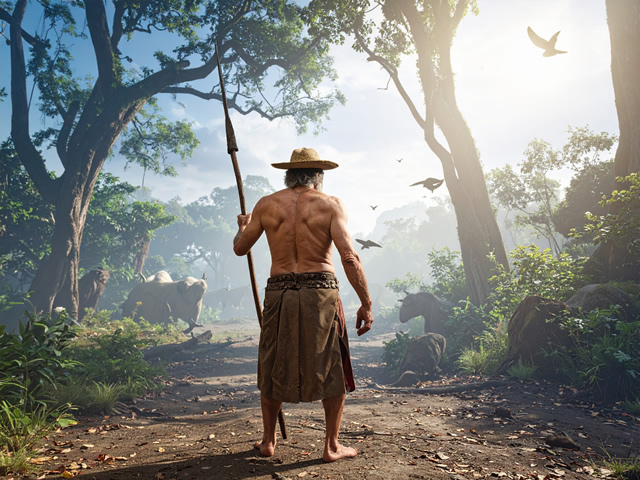
In fourth grade we were introduced to the Animal Kingdom Chart. It was often displayed as a pyramid with a bunch of squiggly things in water along the bottom, topped by a layer of semi-recognizable fish. Then came amphibians and insects, and then rodent-type things and birds. Each tier had fewer animals to maintain the pyramid theme, (and build the suspense!). Next were mammals with maybe a half dozen four-legged animals, then a couple primates, and finally (tada!) the human, a single man holding a spear and looking majestic. When I excitedly displayed the illustration at the dinner table my dad, (who could never resist an opportunity for some good natured teasing), said, “You know the only reason humans are on top of the chart is because we’re the ones who drew it up, right?”
Another subject that appeared in the fourth grade curriculum was geology, which was a tad more grounded than human supremacy. We learned that Long Island is the largest island in the continental US (yay, us!) and because we live on it we were going to dig deep into how it came to be. It’s a glacial moraine, formed when the ice age ended 20,000 years ago (a what? when?). The words in the explanation that followed were easy enough to understand, but the big picture was impossible to comprehend.
Glaciers were apparently rivers hundreds of feet deep that flowed even though they were frozen solid and weighed tons of tons. They gouged valleys through mountains, scraped the plains into lakes and rivers, pushed millions of tons of rocks and dirt in front of them as they expanded, then left it all in a huge pile when they stopped and retreated (psst, look Billy, Susan’s sticking a huge wad of gum under her desk. Lets tell the teacher and get her in trouble). Our lack of interest did not go unnoticed.
“Okay, everybody stand up, form a line, follow me to the gym.” When we got there the teacher positioned us all at mid-court, grabbed one of those huge, flat, raggy brooms the custodians use, and he called my buddy Billy to come up and hold the broom. “When I say go, start pushing slowly until I say stop, but keep holding the broom on the floor exactly where it stopped. We’ll all follow you. Okay, go. Slow and steady, that’s it, keep going, keep going, STOP!”
Then he said to the rest of us, “Can you all see what’s in front of the broom?” We nodded our heads enthusiastically, sensing the moment deserved silence. “Now Billy, when I say so, drag the broom straight back. I’ll help you steady it. Ready?” Billy nodded carefully without breathing or moving another muscle. “Ok, let’s back up, a little more, perfect!” We all applauded without knowing why as Billy exhaled and gratefully left the broom in the teacher’s hand. He put it aside, got down on the floor in his trousers, dress shirt, sport jacket, and motioned us all to crowd around as he pointed. “See how the pile that’s right where the broom stopped is straight up and down, like a cliff, and there’s some clumps of dirt, even a couple tiny pebbles. But then the pile slowly gets smaller and smaller until all that’s left is some dust, then nothing.
That’s what Long Island looks like, cliffs on the North Shore,” pointing to the vertical side of the pile, “and Jones Beach on the South Shore,” now pointing to the dust.
In high school and college the subject of which evolutionary advances separated humans from all other species became more sophisticated than the man with the spear. The opposable thumb was a favorite (your pet dog needs both front paws and his nose to get his favorite bone in position to gnaw), but there are some holes in that theory. Walking erect on two feet is a huge advantage for hunting, and the adaptations of skeletal structure and neurological balancing mechanisms to allow it are awe inspiring. And how about the written word? Other animals have languages (and now it’s thought plants do too) but the written word is at the heart of education.
Oh yeah, education. All parents, from the simplest single cell paramecium to the most intelligent chimpanzee, show their offspring what they need to know to survive. But that stops at the “monkey see, monkey do” level. Being able to teach the why as well as the how is uniquely human, and some humans elevate that skill to an art form. I now live on the other end of that same glacial moraine, and have been on innumerable guided hikes.
Occasionally the leader brings up a moraine, and I jump in and relate that scene (which I’ve remembered in perfect detail for nearly 70 years, even though now I remember almost nothing else). It never fails to elicit oohs, aahs, and wows.
That fourth grade teacher, and a hefty percentage of his compatriots, were artists. And THAT is the real reason we stand alone at the top of the Animal Kingdom Chart.